Preston Historical Research and Restoration Fund.
THE PRESTON HISTORICAL RESEARCH and RESTORATION FUND
has been created to preserve the
memory of the town of Preston (1875-1941) and its people, to restore the church and out buildings,
protect and microfilm photographs, documents and provide for the studies
pertaining to this unique Northern California town. We are working on
designating the Free Pilgrims Church and surrounding community buildings and cemetary at Preston an Historical District.
We are sponsored by the Institute for Traditional Studies, a non-profit
educational corporation and have as our historical advisor, Dr.
Daniel Markwyn Ph. D., Professor of History, Sonoma State University and Holly Hoods of the Healdsburg Museum.
News flash!!!...
Restoration of the Preston Church from the foundation to the roof plus the caretakers cabin and the surrounding trees!
Hello readers!
PLEASE CONTRIBUTE!! Your tax deductible donation, earmarked for the restoration
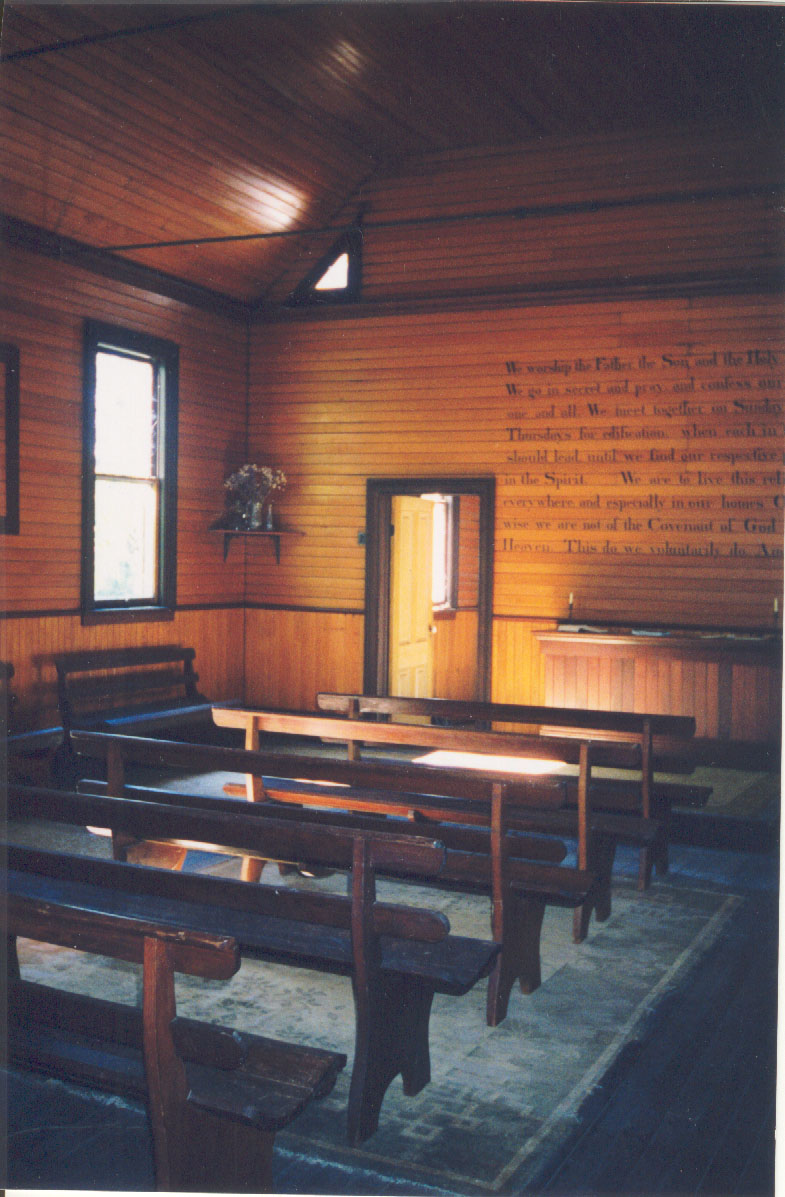
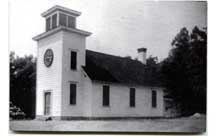
of this beautiful Victorian church with its elegant architecture,
Seth-Thomas 8 day wind-up clock and glorious habitat will be put to use for the highest good of all.
As of November 2007, we have raised $3847.62, plus many donated hours, credit lines, and fabulous items* returning to Preston;
thank you all and tell a friend about this worthy project. (*Example; A large wall mounted bronze bell with nickel coating, mailed all the
way from Virginia, possibly the dinner bell from the Mansion formerly up the hill from the church .)
November '07 we still need to redo the chimney/fireplace.
We have a new roof (Aug 05) which should protect the church for another 50 years, still more to do.
Aug 06 and we're still working doing woodpecker patrol,
calking and painting the tower, working on trees and out buildings, cutting fire trails, etc., etc., etc.
An etc. worth noting; Ed Lynch an old friend has redone the electrical wiring, a most welcome safety update for September 2006.
Lisa Edwin and a few neighbors have jacked up the church to level it and have the
clock working and chiming on the hour once again. From Madame's time to Harry Shumway, Ernie Fischbach, Jim Perry, Jeremy and
the Ellis'
the clock has mostly run since it was installed in the late 1800's. WE ALL CAN REJOICE AT ITS RUNNING AGAIN.
As of Oct 1, the church and cabin have been calked and painted to preserve the wood by the Ellis' and volunteers
from the community.
If you have money raising ideas or would like to host a benefit for the PHRR Fund. Please contact Deborah Fischbach
at 707 937 2133.
The engineer's report is already done and paid for, carpenters are committed...(to volunteer your talents,
contact Lisa and Edwin Ellis in Preston at 707 894 4445, 50 Geysers Rd., Cloverdale, CA. 95425).(Because of insurance issues we cannot
accept volunteer workers right now but I'll leave Lisa and Edwin's contact information here).
NOW WHAT WE NEED IS $ FOR MATERIALS.
You can make your donation using a credit card with a secure payment
via paypal, ID=PHRRF. Try it today! Please include your address for a formal snail mail receipt. Or send your tax deductible donation to;
"I.T.S. Preston Fund" (memo=church) 21512 Orr Springs Rd., UKIAH, CA 95482.
All contributors will receive a receipt, thank you and be added to our list of supporters with a finish date and a
contact if you would like to visit The Preston Free Pilgrims Church.
Renovated Caretaker's cabin at the Preston Church, Historically; "The Sunday School House"
Restoration starts with the trees;
David Hardin has donated his time and expertise to trimming several large
trees around the Preston Church and the Elmers house this September. He has
taken a lot of dead wood and branches off a huge live oak that was
overhanging the Church. The side is now opened up and more visible. David
has also trimmed and shaped a towering eucalyptus next to the Elmers house.
The majority of Preston buildings, including the Preston Mansion, were
destroyed in a devastating fire in 1988. Lisa and Edwin Ellis, the Preston
caretakers, safeguard the surviving buildings by maintaining firebreaks and
keeping trees trimmed back.
More news, old and new
We at ITS are very excited about our "Williamson Act"
designation for Open Space and Wildlife Habitat
of Preston Church Property, it will be of help in our application for National Historical status.
Mr. Brian Hunter, Region 3 manager of Department of Fish and Game states; "Because of low agricultural capability which
prevents
the realization of agricultural economy and high wildlife values, the property would appear to be a prime candidate for
the Open Space and Wildlife provisions of the Williamson Act. We support such a designation."
This has come about and the Preston Church was designated a Sonoma County Landmark in 1988. Lisa and Edwin Ellis are
living in the Elmers'
House below the church, taking care of things and keeping the Seth-Thomas 8 day wind-up clock wound.
The new owners of the church, the Elmers' House and the surrounding 100 acres are very
supportive and excited about this project. Lisa Ellis has all the documentation
collected and Holly Hoods M.A. and Associate Historian for Clark Historic Resource Consultants, is overseeing the
application process.
A note from Holly Hoods 9/15/01;
Landmark Status:
"My plan is to nominate the Preston Historic District to the National Register of Historic Places, not just the church,
but all of the remaining buildings and sites (cemetery) associated with the Preston colony. In my thesis, I developed
the necessary historic contexts to establish the district's significance, according to the National Register Criteria
for Evaluation.
My Master's thesis on Preston was completed December 2000 (for MA in Cultural Resources Management from Sonoma State
University). Dan Markwyn was one of my three thesis advisors. The thesis is titled, "Preston: History of a
Late-Nineteenth Century Religious Community in Sonoma County, California." It is 180 pages long with 35 photos and maps."
We at ITS
have a copy in our archives.
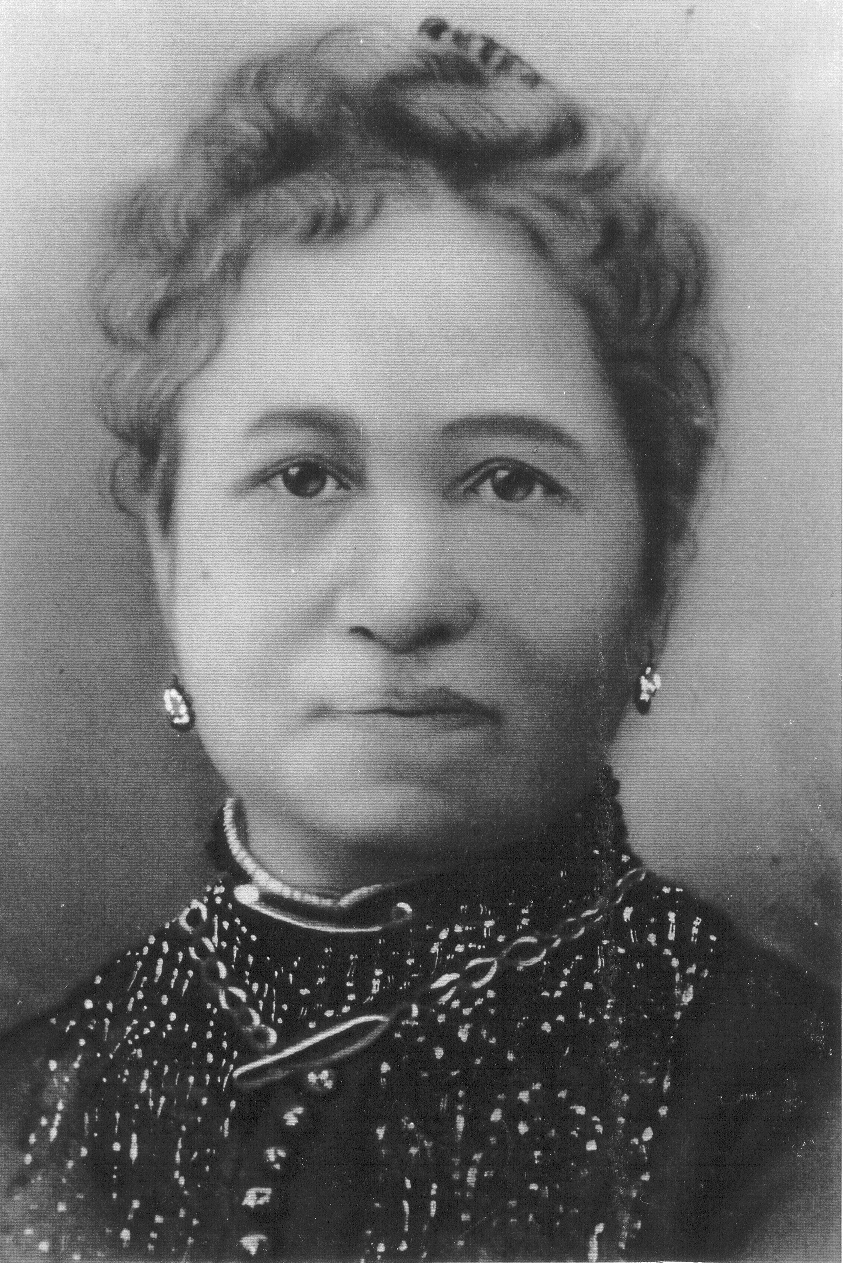
Madam Emily Preston
The reason the Preston community was such a success can be found in the
fact that Madam Preston was an immaculate housekeeper and this quality
extended over all aspects of the community. She had a complete system that
saw to the wants and needs of the individual, their physical as well as
spiritual guidance, work and wages,
entertainment, housing, etc. Madam Preston was the soul of pragmatism, she
led by example and was highly respected. Her reputation as a skilled healer
spread far and wide and many people who came to her for treatments ended up
staying to form the Free Pilgrims Covenant. Madam Preston's
message was direct;
Your worth is measured by your deeds, not by your words, It's what's in your
heart that matters. (Inspirational Message, 9/9/06, p.56)
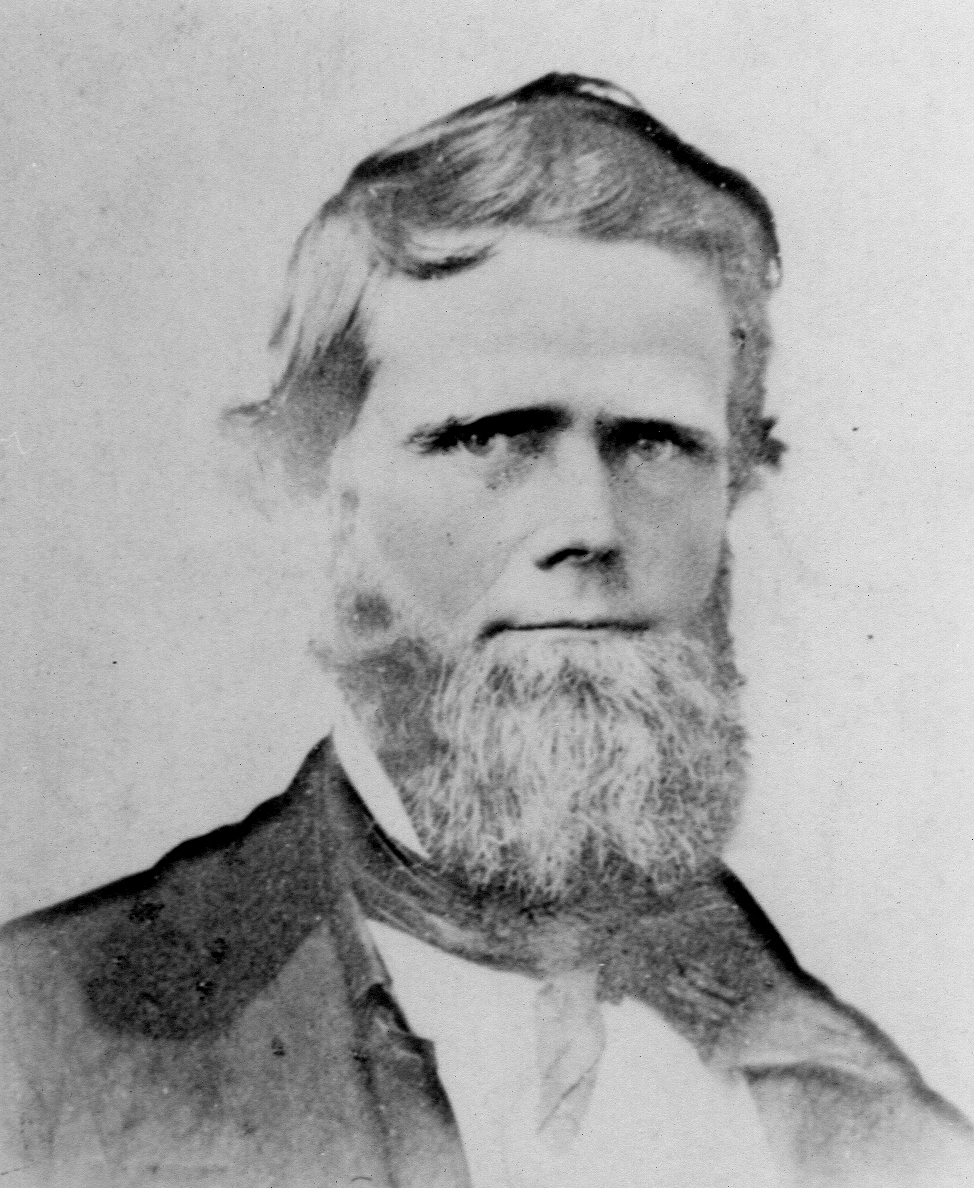
Hartwell and Emily Preston played an important role in the history of
Sonoma County and the North Coast. The story of their lives is a rich
legacy of history and their message is untarnished by time. Article by Lisa Ellis
Link to Photos page of Preston, community musicians,
Emily and Hartwell Preston.
Emily Preston and Her Community of Faith
Perhaps one of the most intriguing women in Sonoma County history is Emily
Preston, founder of "Preston," a health-oriented religious colony, over one
hundred years ago. Life in the northern Sonoma County village centered
around the Christian teachings and medical practice of the charismatic Mrs.
Preston, widely and respectfully known as "Madam." The settlement had
characteristics in common with three contemporaneous Sonoma County utopian
colonies, but unlike Fountaingrove, Icaria Speranza and Altruria, Preston was
not founded as an intentional community. While lacking a formal political
structure, Preston nevertheless had a unity based on commitment to Emily
Preston and to the shared ideals of her Religion of Inspiration.
After experiencing a spiritual epiphany in 1871, Emily Preston claimed to be
able to literally perceive the words of God written on walls of light in
front of her, and photographs of Heaven and Hell. This photography enabled
her to perceive the true natures of things and to "diagnosticate cases at a
distance." Emily Preston encouraged devout believers to build residences and
summer cottages on the Preston land holdings, beginning in the mid-1880s.
Many of these people dedicated their lives to living by her teachings. They
moved to Preston to enjoy the advantages of her spiritual influence on a
daily basis. They formed a close-knit community that welcomed the patients
who came to Madam Preston for treatment. The village numbered about 150
people at its peak in 1895, and declined sharply after the death of its
leader (and main employer) in 1909. It is difficult to precisely estimate
the size of the Preston colony, since many devoted believers resided away
from the community. Madam Preston's influence extended far beyond the Sonoma
County settlement.
MEDICAL PRACTICE
Emily Preston's practice flourished within the unregulated context of late
19th-century American medicine. In California from 1850-1900, the practice
of medicine was open to anyone, subject only to liability for damages in a
case of lack of skill on the part of the practitioner. It was not a crime,
for example, to treat the sick with their consent and with honest intention,
no matter how ignorant one was of the quality of the remedies used. This was
how Madam Preston was able to diagnose illnesses through the mail and
prescribe her own homemade medicines to patients without benefit of formal
medical training or license, yet remain within the law. Preston neighbor
Mary Mowbray recalled seeing "a lot of human wrecks" come to Madam Preston
for help:
She always did her best and tried to make them well. She had a lot
of
sick people come to her that were given up by the medical doctors.
She
cured a lot of them. Some were hopeless. Nothing would help them.
And if you were too poor to pay for her treatment, she would give it
to
you free.
Madam Preston's prescriptions included exercise, fresh air, mineral water,
herbal tonics and medicinal spirits to build up strength. Her medical
practice raised eyebrows, however, for her unorthodox method of diagnosis by
mail, and especially for her unpleasant and uncomfortable "blister
treatment."
The blister treatment was the fairly common, if drastic, practice in early
medicine of applying irritants to the skin, in the belief that internal
diseases could be thereby drawn to the surface of the body and dispelled. A
widely prescribed therapy since the Middle Ages, it has fallen out of favor
in the United States within the last 100 years. The cornerstone of Madam
Preston's medical treatment was her liniment, a typical blistering agent.
Some of her patients believed so strongly in the merits of the blister
treatment that they were rarely without one or more of the running sores
somewhere on their body. Wine bitters and delicious wine cordials were
prescribed as crucial adjuncts to the blister treatment to keep up the
patient's strength (and were, no doubt, greatly appreciated). Alcohol was
otherwise prohibited to Preston colonists.
In 1903, Madam Preston began printing a "Price List of Medicines and How to
Use Them." Besides liniment, wine bitters and wine cordial, the mainstays of
her practice, the list of available medicines included: blood medicine
(tonic), sweet oil, cough medicine, gin and garlic, fever paste, pile remedy,
assafoetida pills, vagina balls, vagina wash, eye sponge, salve, fasting
paste, wine bitters paste, and catarrh snuff. Blisters were recommended for
a variety of ailments, including: heart, stomach, bladder, kidney, liver or
lung trouble; rheumatism, and diphtheria.
Despite the discomfort of some of her remedies, hundreds of people trusted
and followed Emily Preston's medical advice. Though she cultivated this
influence, she did not want to overstep her abilities, and she did not claim
to be infallible. On the strength of word-of-mouth advertisement alone,
Emily Preston developed a thriving mail-order medicine business. The
collection of papers that she left when she died comprised over 10,000
letters, the majority of which were written by people seeking medical advice
or ordering medicine. Some mail arrived from Washington Territory, Oregon,
Nevada and points further east, but the bulk came from the towns and
hinterlands of northern California. Madam Preston's patients represented a
cross-section of the California public, and included bank presidents, postal
clerks, teachers, preachers, farm hands, sheriffs, millers, stockbrokers,
shoemakers, editors, and politicians. Surviving letters from patients
indicate that Emily Preston had a good deal of success in treating their
ailments of body and spirit.
DEVELOPMENT OF PRESTON COMMUNITY
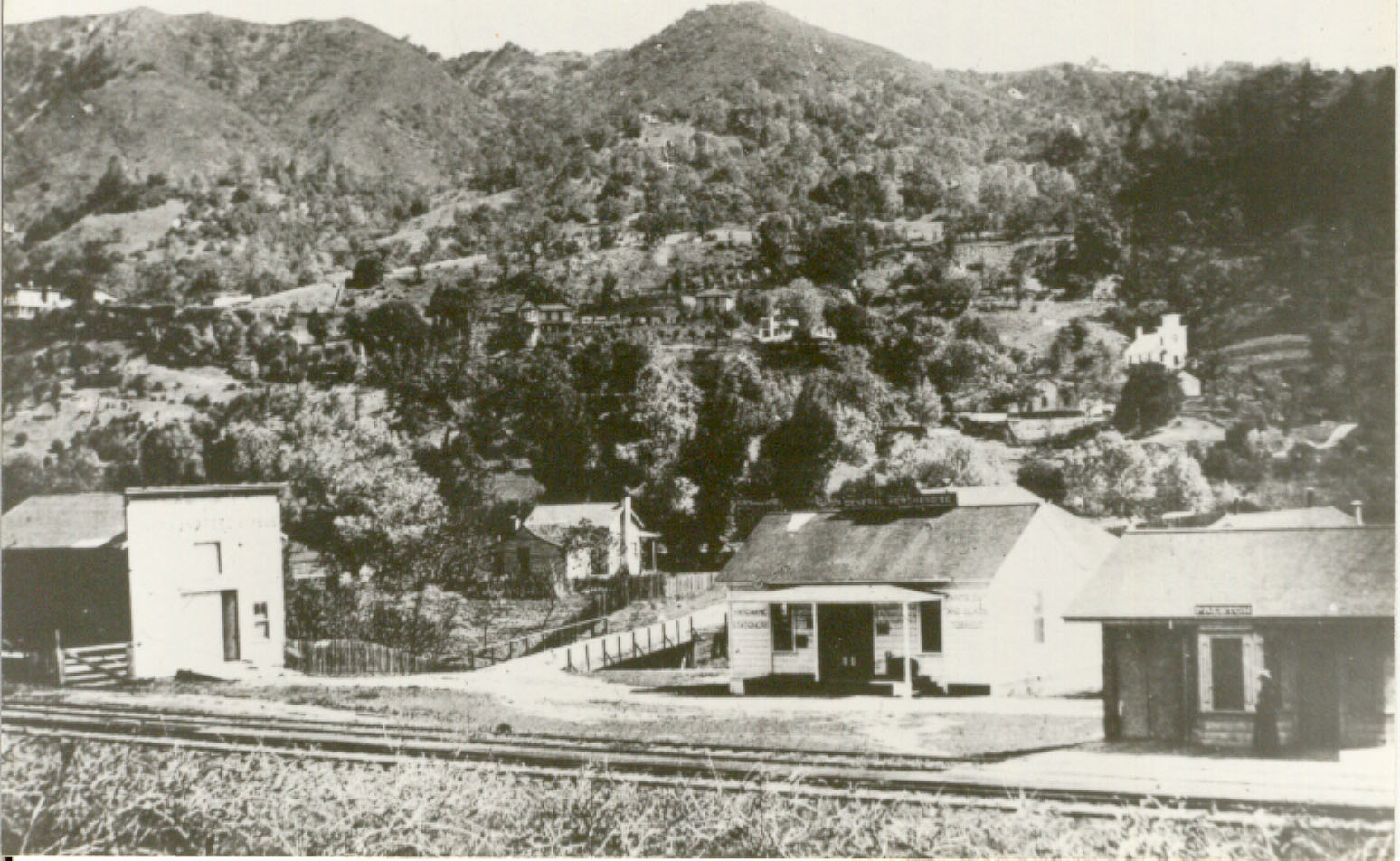
The Preston village was located 2 ½ miles northeast of Cloverdale, at the
northern edge of Sonoma County. The commercial center was situated just west
of the Russian River, on the flat near the Northwestern Pacific Railroad
tracks and the Preston depot. Businesses included a general store and post
office, a livery stable, a lumber yard, a planing mill, and a water and soda
bottling works. A county road led from the business center east to the
residential district known as "Oak Mountain," where the church, school and
the homes of the Prestons and the Preston colonists were located.
For more than a decade before there was ever a "Preston" town, there was a
Preston ranch. The physical evolution of Preston as a community had its
roots in the individual land purchases and consolidation of real estate by
Hartwell L. Preston. H.L. Preston, a well-known attorney from Northern
California, purchased a vineyard and stock ranch, 1-½ miles from Cloverdale.
According to the Cloverdale Bee in June 1872, Preston's plans were to retire
from the practice of law and devote his attention to stock raising and
wine making. He and Emily Lathrop Appleton Burke, already a prominent faith
healer in San Francisco, were married in Oakland in 1875. In their late
middle age, they sought to retire from active public life and had the
financial means to do so. After their marriage, the Prestons moved to
Hartwell's Sonoma County ranch, but retirement did not prove to be easy.
Emily Preston's patients continued to seek her out in person and written
requests for aid poured in. The Prestons decided that Emily could not refuse
to use her divine gift to help relieve suffering. Hartwell built a twenty-
room hospital/boarding house to shelter patients whose illnesses required
special care and close monitoring. Less severely ill clients boarded in
Cloverdale or just south of Preston at Pine Grove resort, where Mrs. M.
McConathy charged a modest weekly rent for her furnished cottages.
FOUNDING A RELIGION
As Emily Preston's medical practice flourished, so did her spiritual
influence. From the late 1870s through 1885, Emily and Hartwell Preston held
religious services at their home. They asserted that all faiths can go to
Heaven "if their hearts are right," because "truth has a voice that puts way
all dogmas." The Prestons emphasized the importance of cultivating a direct
personal relationship with God. They did not consider themselves to be
ministers. In fact they advocated skipping the unnecessary
middlemen--ministers and priests. The Prestons invited others to join them
in "living religion" at Preston. The new faith came to be called the
Religion of Inspiration, and its members became known as the "Volunteers of
Heaven" or "Covenanters." In 1886, millionaire philanthopist Frederick
Rindge, greatly helped by Madam Preston's treatment, built a church for the
budding settlement to show his appreciation. Every week Emily Preston stood
before the congregation and read the divine messages that she saw printed on
the walls of light.
OUTSIDE PERCEPTIONS OF PRESTON
As might be expected, the Preston colony attracted a good deal of attention
during its existence. Newspapers of the era provide not only descriptions of
the growing village, but also reveal clues about attitudes toward Emily
Preston and her followers. One reporter from the Sonoma Democrat wrote an
article after a November 1886 visit to "Prophetess Preston":
It is generally known that she performs her treatment from directions
given from an unseen power, and which she terms as faith cure. Mrs.
Preston has become very wealthy in a few years from her practice, as
it is
claimed she was comparatively without means when she came to
Cloverdale. She is regarded by everyone acquainted with her as
enveloped in an unfathomable mystery. She has patients from nearly
every part of the civilized world. Most of them are very wealthy,
and while
she talks religion she is looking after the dollars and cents with a
practical
and businesslike manner.
There were, of course, a wide variety of responses to the Preston phenomenon.
Numerous critics and skeptics dismissed Mrs. Preston's medical practice as
"quackery," and her religious visions as either occult spiritualism, proof of
a delusional mind, or altogether fake. Others downplayed the disconcertingly
mystical aspects of the colony to emphasize the benevolence and charity
practiced therein. A few, like the Sonoma Democrat reporter quoted above,
observed a number of wealthy individuals at Preston, and made insinuations
about Emily Preston's finances.
In November 1889, a reporter from the Healdsburg Enterprise remarked upon the
unusual phenomenon of Preston. Noting that there were probably very few
people in Sonoma County who had not heard stories--some true and more that
were greatly exaggerated--about Madam Preston:
Who wields a strong influence over affairs in the northeastern corner
of
the county. . . While she is called an imposter and an ecclesiastical
mountebank, there are not a few who ascribe to her a power all but
divine.
Those who would condemn her as an imposter on the strength of her
pretense to divine inspiration and direct communication with the ruler of
the universe, consider the good results of her teaching among those
who
believe, and are silent.
The people who lived at Preston felt themselves lucky to be part of a blessed
enterprise. Devout in their faith and dwelling so close to their source of
inspiration, they enjoyed a special reverence for their surroundings. Nathan
Bowers, who grew up in the Preston colony, remembered:
These people were obviously grateful for being alive, for being
members
of this community and especially for the privilege of living "here on
this
mountain."
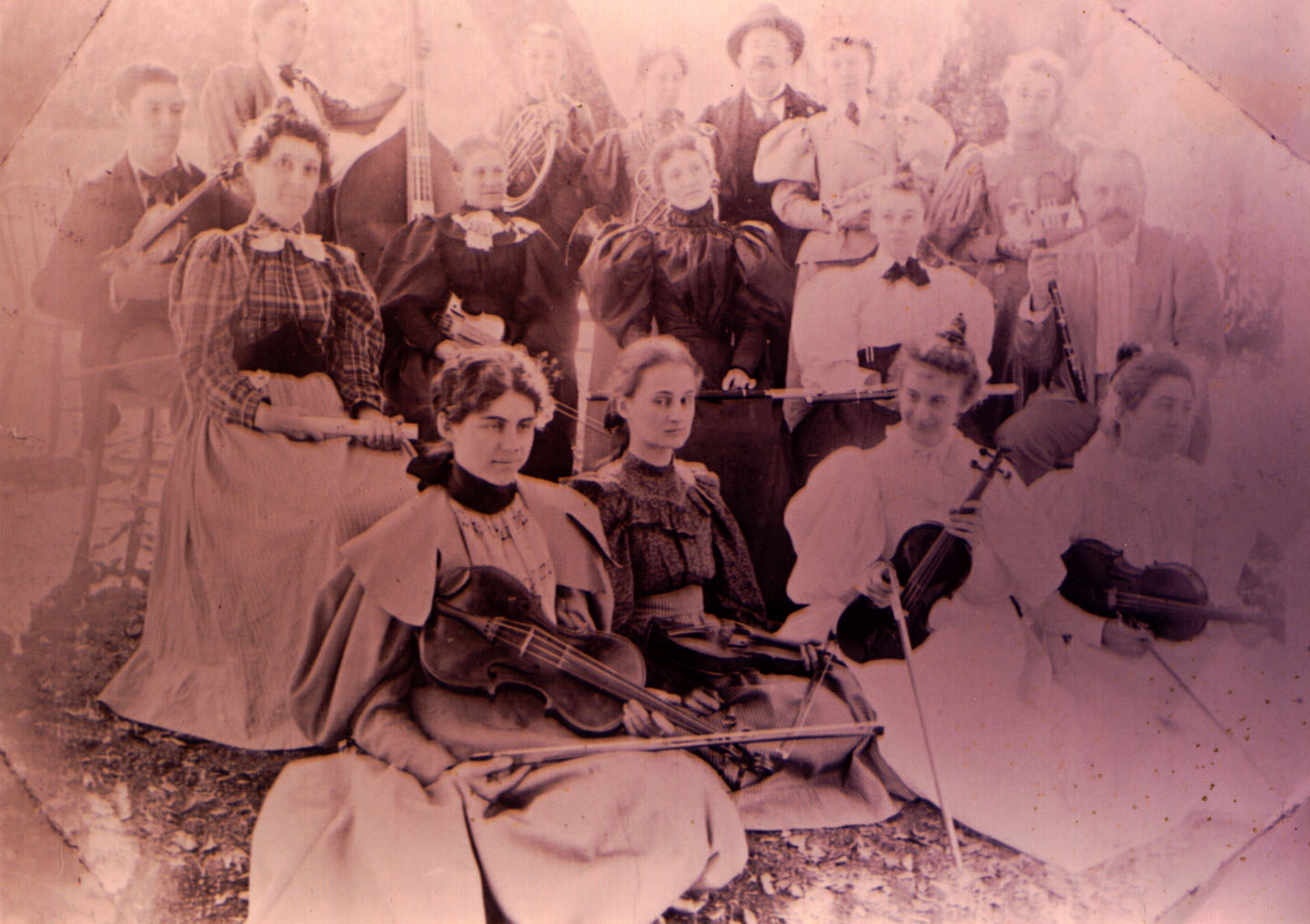
Community life at Preston centered around spiritual, medical, musical and
agricultural pursuits. It was a family-oriented community, with a number of
school-aged children in the 1890s. The village had two orchestras. Fourth
of July was the biggest holiday of the year, celebrated with a picnic,
boating, bicycle races and games at Preston Lake. Christmas was also always
festive, with special church services and a huge, decorated tree at the
schoolhouse. Preston residents regularly entered the agricultural
competitions, and participated in the displays and entertainments of the
Citrus Fair. Summers were spent in spiritual retreat and contemplative
enjoyment at Inland Camp at Preston Lake, a few miles north of the Preston
residential district.
DECLINE OF PRESTON
By the time of her death, the eccentric Emily Preston had won over most of
her critics, and was a respected and benevolent figure, honored in Sonoma
County society. Her passing on January 22, 1909 was front-page news and a
tremendous blow to the community. The funeral was simple but impressive,
with an enormous crowd in attendance. Describing the service, the Healdsburg
Tribune paid editorial tribute to "Madam Preston, Founder of the town of
Preston and of the Preston Sanitarium." The newspaper offered its highest
praise, that: "Mrs. Preston has made the world happier and better for having
lived in it. She rests from her labors and her good works do follow her."
After Emily Preston's death, the year-round residential community gradually
diminished through the 1910s-1930s. Most writers have concluded that the
community lacked commitment or cohesiveness without Madam Preston as the
pivotal figure. Actually other, more mundane factors contributed
significantly to the decline.
Some colonists were forced to leave Preston for purely economic reasons: they
needed to live elsewhere to find work. Madam Preston was, after all, the
major employer of the rural village, and without her industries the local
economy suffered a huge blow. Not all of the Preston colonists were
independently wealthy or retired. Cloverdale, the nearest town, two miles
away, had few employment opportunities.
Preston also lost members through attrition. Many Preston colonists were
older adults with preexisting health problems when they moved to Preston in
the 1880s and 1890s. As these colonists aged and died in the early 1900s and
1910s, they were not replaced with new members. Another major loss was that
the children of the Preston colony, who attended school in Preston in the
1880s and1890s, did not choose to remain in Preston as Volunteers. These
children did not make the same commitment to the community as their parents
did. The faithful continued to hold church services in the Preston Church
through the early 1940s.
Emily Preston's role within the Religion of Inspiration was as both founder
and prophetess. The founder of a religious sect is typically a dominant
personality around which the religion is based. The prophet/ess is usually
the one to convey holy messages to the group. Emily Preston filled both
roles within the Preston Church. As a consequence, however, she was
irreplaceable. After her death, her religion gradually faded from practice.
Only a handful of buildings survive today to commemorate the significance of
the Preston colony, including the church and several colonist residences on
Geysers Road in Cloverdale. The loss of most of the Preston buildings in
1988 to a devastating fire underscores the importance of recognizing,
recording and preserving the remaining historic buildings.
Articles by Holly Hoods
Sources
Bowers, Nathan, "Emily Preston: the Madam," 1967 [Unpublished manuscript on
file at Healdsburg
Museum].
Healdsburg Enterprise, 20 November 1889.
Healdsburg Tribune, 29 January 1909.
Mowbray, Mary, "My Memories," 1949 [Unpublished manuscript on file at
Healdsburg Museum].
Payne, Janice "Go Tell It On the Mountain: an Account of Madam Emily Preston
and Prefatorial Note on
the Preston Papers" (Sonoma State University: M.A. Thesis 1976).
Santa Rosa Press Democrat, 29 January 1909.
Preston, Emily, "Creed of the Free Pilgrim's Covenant Church," [Undated
pamphlet] in Preston papers,
Healdsburg Museum.
"Price List of Medicines and How to Use Them," 1903.
Sonoma Democrat, 20 March 1886; 25 September 1886
Spector, Benjamin M.D., "Guideposts in the History of American Medicine,"
History of American
Medicine: a Symposium, Felix Marti-Ibanez, ed. (New York : MD
Publications, 1988).
Thanks to Adrian Praetzellis, Daniel Markwyn and Susan Clark, my M.A. thesis
committee. (And to Lisa Ellis, unsung committee member)
Trent Anderson photo 1978 Preston Church with clock and 70's era community with Ed Lynch in tie, Catana Sanchez, Ernie Fischbach with Jeremy's head above and behind him, Michael the jeweler Wallace, Don Brown
far right, far left Dave Ricker and Bob Thomas(both now deceased), Elliott Gould, Edwin Ellis
and some others in the shadow that we cannot make out, is it you? write us.
More information on the Preston Community
The Healdsburg Museum curates the Preston papers, a collection of approximately 1,500 original documents from Emily and Hartwell Preston.
Healdsburg City Museum, Holly Hoods - Research Curator, Healdsburg Museum, 221 Matheson Street., Healdsburg, CA 95448. (707) 431-3325 healdsburgmuseum@earthlink.net
PRESTON File, Cloverdale Public Library
The Press Democrat www archives.
The Institute For Traditional Studies, Preston Historical Research
Dept. Photos of Preston, commmunity musicians, Emily and Hartwell Preston.
The Institute For Traditional Studies, ITS
A registered non-profit corporation, Chartered 1979
Deborah Fischbach, ITS program director and webmaster, (707) 937-2133 or e-mail us:
director@institutefortraditionalstudies.org
The Institute For Traditional Studies Homepage